Death Has Been Included. But Has Justice Been Delivered?
The Government must explain how the scheme recognises bereavement, why compensation outcomes differ and how its decisions reflect the Inquiry’s recommendations.
By Anonymous · Oct 14, 2026
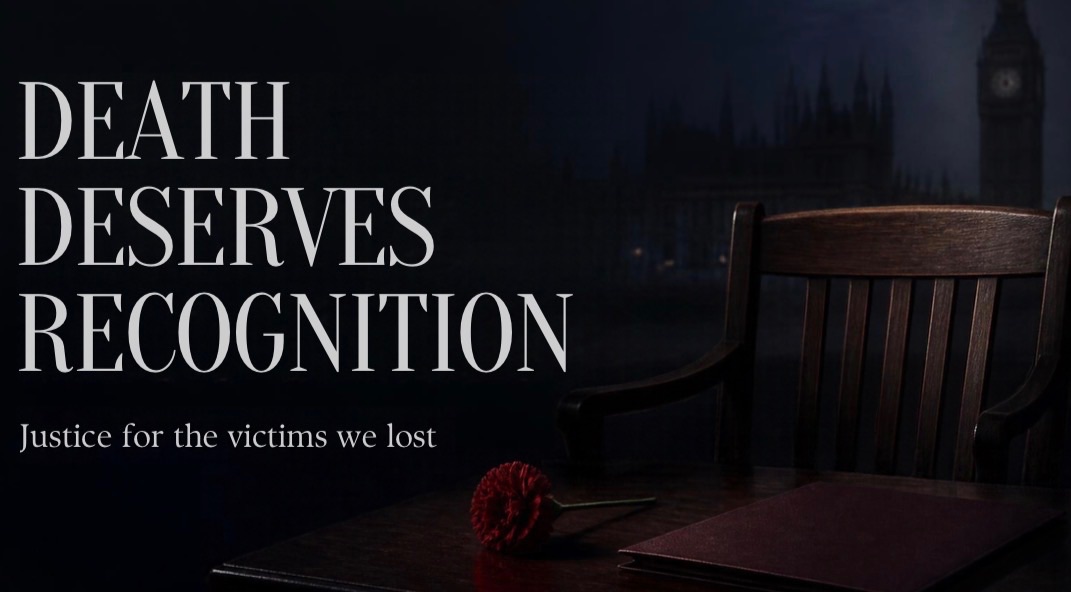
Death cannot be meaningfully recognised simply by declaring that it has been included.
The Government tells bereaved families that death has been recognised within the Infected Blood Compensation Scheme. But repeating that statement does not answer the question families have been asking: has death been meaningfully recognised, or has it simply been incorporated into a compensation framework that continues to produce unequal outcomes?
For families who have spent decades grieving loved ones infected through NHS blood and blood products, this is not an abstract argument about policy. It is about recognition, dignity and whether the state has properly acknowledged the consequences of the harm it caused.
Recognition is not the same as justice
The Government’s position is that the scheme provides compensation for the consequences of infection and death. But the existence of an award does not, by itself, settle whether the scheme is fair or whether it reflects the principles set out by Sir Brian Langstaff in the Infected Blood Inquiry.
The distinction matters.
An injury award recognises harm suffered by an individual. Death brings its own consequences, including the loss experienced by loved ones and the financial and practical consequences for families left behind.
The question is whether the scheme adequately recognises those consequences and whether its decisions are consistent with the Inquiry’s recommendations.
Bereaved families should not have to accept the assertion that death has been included as a substitute for an explanation of how their loss has been assessed and valued.
Why are deceased victims valued differently?
One of the most difficult questions concerns the differences in compensation outcomes for deceased victims infected with HIV and those infected with hepatitis C.
We recognise that different infections can cause different medical consequences, and that compensation must account for the severity and impact of individual circumstances. But that does not remove the need to explain the principles behind substantial differences in awards.
What precisely justifies the disparity, and where is that justification supported by the Inquiry’s recommendations?
Sir Brian Langstaff’s work considered the different impacts of HIV, hepatitis B and hepatitis C. The issue is not whether those differences exist. It is whether the scheme’s particular distinctions are justified, proportionate and consistent with the principles of fair compensation.
The death of one victim should not be treated as inherently more deserving of recognition than the death of another simply because the infection involved was different.
If the Government believes the distinctions are justified, it should explain why, identify the evidence supporting them and show how the approach follows the Inquiry’s recommendations.
If the scheme departs from those recommendations, the Government should be transparent about that departure and explain its reasoning.
Bereaved families deserve answers, not simply assurances that the system has already accounted for their loss.
Billions of pounds — and questions about financial priorities
The financial framework raises further questions.
The Government announced £11.8 billion in funding for the compensation scheme in the Autumn Budget 2024. Subsequent forecasts have changed, demonstrating why the original announcement must not be confused with a final spending limit.
The National Audit Office’s reported forecast of £12.8 billion in overall scheme payments provides an important basis for scrutiny. But comparisons with earlier estimates must be made carefully: the figures need to cover the same costs, claimant groups and periods before any apparent reduction can be quantified.
That does not make the financial questions any less important.
Why did the original estimates change? What assumptions were used to calculate the expected number of claims and the compensation payable? How have those assumptions influenced the design and delivery of the scheme?
And, most importantly for bereaved families, what evidence demonstrates that the compensation framework was designed around fair recognition of harm rather than an unexplained reduction in liabilities?
We are not claiming that any difference between a forecast and the final outlay represents money owed to victims. Nor are we suggesting that the existence of a budget automatically proves that every proposed award was affordable.
We are demanding transparency about the decisions that determine how compensation is calculated and distributed.
If financial considerations influenced the treatment of deceased victims or the recognition of bereavement, the Government should explain that openly. If they did not, it should explain the other reasons for the distinctions that families continue to challenge.
A scheme involving billions of pounds must be able to withstand reasonable questions about its financial assumptions and its moral priorities.
The Inquiry’s recommendations must mean something
The Infected Blood Inquiry was established to investigate how this scandal happened, the harm it caused and what lessons must be learned.
Its recommendations on compensation were not an invitation to acknowledge the suffering of victims in principle while leaving important questions about fairness unanswered in practice.
The Government and the compensation scheme’s administrators must be able to demonstrate how the scheme’s rules reflect the Inquiry’s recommendations, which recommendations have not been adopted in full, and why.
This requires more than pointing to the existence of a compensation scheme. It requires clear explanations of the decisions behind it, including the treatment of deceased victims, the consequences of death for bereaved families and the rationale for differences in awards.
The Inquiry’s Additional Report on Compensation, published in July 2025, made further recommendations about the scheme’s design and delivery. The Government’s response accepted some recommendations immediately and committed to consultation on others. That history makes transparency about implementation particularly important.
Families should be able to see what was recommended, what was changed, what remains outstanding and why.
What we are asking the Government to answer
We call on the Government, through the Cabinet Office and the minister responsible for the Infected Blood Compensation Scheme, to provide clear and substantive answers to the following questions:
1. **Death recognition:** How does the scheme meaningfully recognise the consequences of death, beyond stating that death is included within the compensation framework?
2. **Differences in awards:** What evidence and reasoning justify the differences in compensation outcomes between deceased victims infected with HIV and those infected with hepatitis C?
3. **The Inquiry’s recommendations:** Which of Sir Brian Langstaff’s recommendations have not been implemented in full, and what justification has the Government provided for each departure?
4. **Financial decisions:** How have the scheme’s cost estimates changed, what assumptions explain those changes, and what role, if any, did financial considerations play in the decisions affecting deceased victims and bereaved families?
5. **Public accountability:** Will the Government publish a clear explanation of the principles underpinning these decisions, including the evidence used to justify differences in compensation outcomes?
These are questions about government policy, public expenditure and the fulfilment of commitments made following a national scandal. They require answers from those responsible for the decisions, not simply explanations of how the scheme is administered.
Justice requires answers
No compensation scheme can restore a life, return lost years or undo the suffering experienced by infected people and their families.
But the impossibility of repairing the past makes fairness, recognition and accountability even more important.
For bereaved families, the issue is not simply the amount of money paid. It is whether the state has properly acknowledged the injustice their loved ones suffered and whether the system created to provide redress treats their loss fairly.
Death cannot be meaningfully recognised simply by declaring that it has been included. Justice requires the Government to explain what that recognition means, how it has been delivered and why the resulting differences in compensation are fair.
We call on the Government to answer these questions openly, publish the reasoning behind its decisions and demonstrate how its approach reflects the recommendations of the Infected Blood Inquiry.
The people who died must not disappear behind the language of policy. The families left behind must not be expected to mistake an administrative decision for justice.
The Unheard Voice will continue to ask these questions — firmly, fairly and with evidence.