Susan is at the end of her life—and still waiting
Susan’s family says she is still waiting for a compensation top-up linked to changes in legislation as her health deteriorates. In this follow-up, they question whether her assessment fully recognises her lasting liver damage, complex health problems and loss of independence.
By Anonymous · Oct 21, 2026
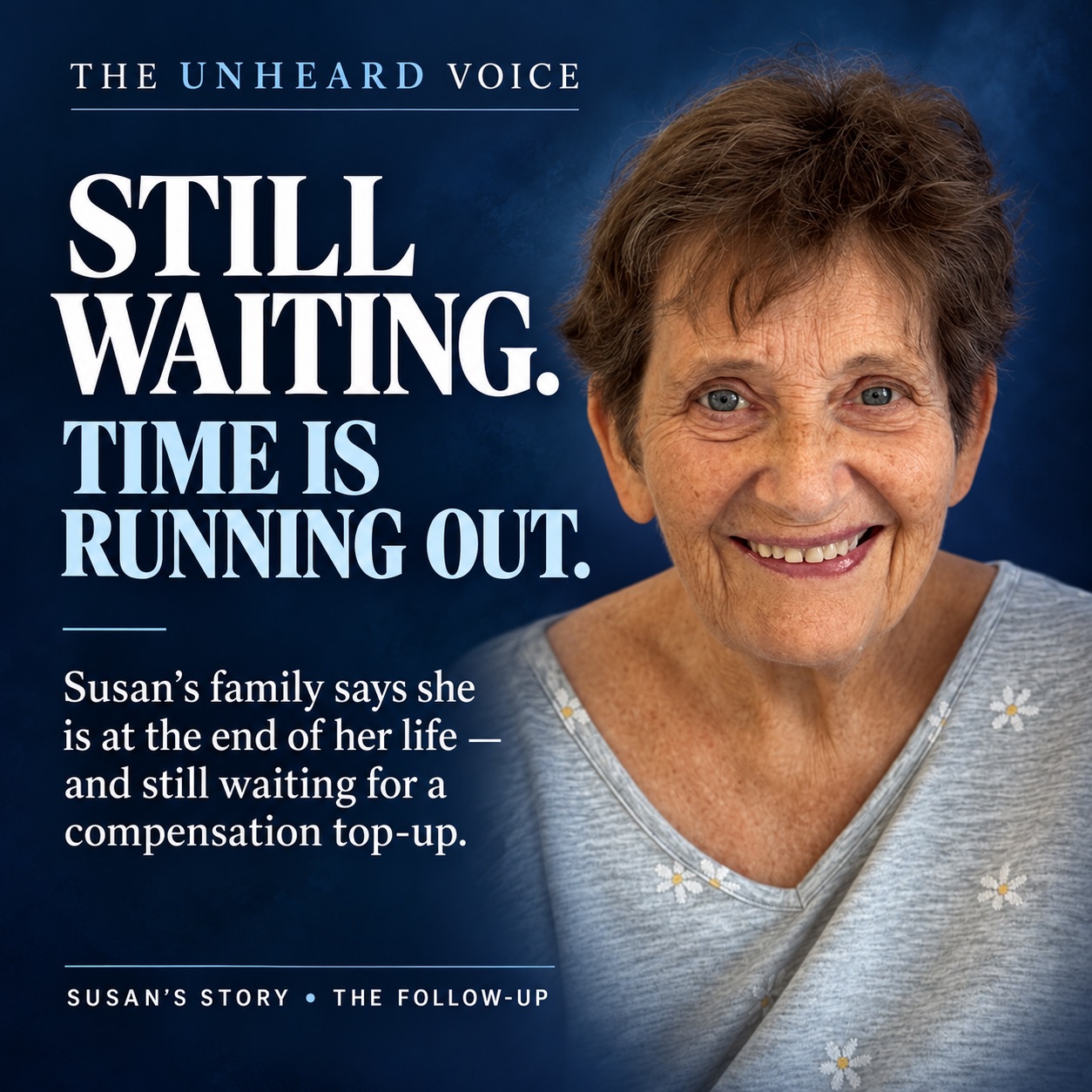
“Susan’s remaining time cannot be restored. Her family wants support to reach her while she is still here to benefit from it.”
When The Unheard Voice first shared Susan’s story, her family was already concerned about her deteriorating health and whether the compensation process would recognise the full extent of her illness.
Now, they say she is at the end of her life—and still waiting for a compensation top-up linked to changes in legislation.
For Susan, previously described in our reporting as 75, the urgency cannot be separated from the time she has left. Her family wants her to benefit from that support while she is still here.
The infection was cleared. The consequences remain.
According to her family, Susan’s hepatitis C was successfully treated and eradicated, but she has been left with cirrhosis and fibrosis of the liver.
They describe hepatic encephalopathy involving episodes of confusion, alongside serious kidney problems, significant fluid retention, heart problems and increasing frailty.
Her family’s concern is that clearing the virus has not brought an end to the illness and disability she lives with. They want her assessment to recognise the lasting damage, the complications supported by medical evidence and the help she now needs.
Susan’s story reaches beyond a diagnosis. It is about the life she can lead today.
A growing loss of independence
Her family says Susan previously managed at home independently, including washing, preparing meals and moving around her home.
Following her deterioration, she has needed substantially more support with daily activities and monitoring because her condition can fluctuate.
For her family, this loss of independence is an essential part of her claim. They want the assessment to reflect what Susan can actually do, what she needs help with and the care required to keep her safe.
Alongside supporting her, they are trying to understand compensation decisions and ensure that her medical history is properly considered.
Why are complications being considered separately?
The family understands that Susan’s claim manager has said her kidney and heart problems will not affect her claim because they are unrelated to hepatitis C.
However, they say her treating clinicians have discussed the interaction between her liver disease, kidney impairment, fluid retention, heart problems and frailty.
This does not establish that every condition was caused by her original infection. The family’s concern is whether the assessment has adequately considered the relationships between those conditions and the lasting consequences of her liver disease.
They want to know which medical records and specialist opinions have been considered, who has assessed the medical links and what evidence supports any conclusion that a condition falls outside her claim.
Where relevant evidence has been overlooked, they want a clear opportunity to have it considered.
A family should be able to understand how a decision about their loved one’s health has been reached.
Still waiting for the top-up
The family says Susan remains waiting for a top-up associated with changes to compensation legislation.
The precise payment route, whether entitlement has been confirmed and the reason it remains outstanding have not been independently established for this report.
What her family has made clear is the urgency of her circumstances. They say Susan is now at the end of her life.
They need a direct explanation of what happens next: whether anything further is required, what is preventing progress and when she can expect a decision or payment.
They also need to know how her end-of-life circumstances are being taken into account.
These answers matter because Susan’s remaining time cannot be restored once it has passed.
Recognition while she is still here
Compensation cannot reverse Susan’s illness or return her independence. But timely support could still matter to her comfort, care and choices.
Her family wants the full medical evidence considered, decisions explained clearly and the outstanding top-up addressed with urgency.
They should be able to spend this time supporting Susan, with clear information about her claim, rather than repeatedly trying to establish what will happen next.
When we first told her story, the question was whether help would reach her in time.
Her family says that question is now more urgent than ever.