When Illness Changes the Family Before Anyone Talks About Compensation
Long before compensation forms, case managers and calculations, something else was already happening inside thousands of homes.
By Anonymous · Oct 6, 2026
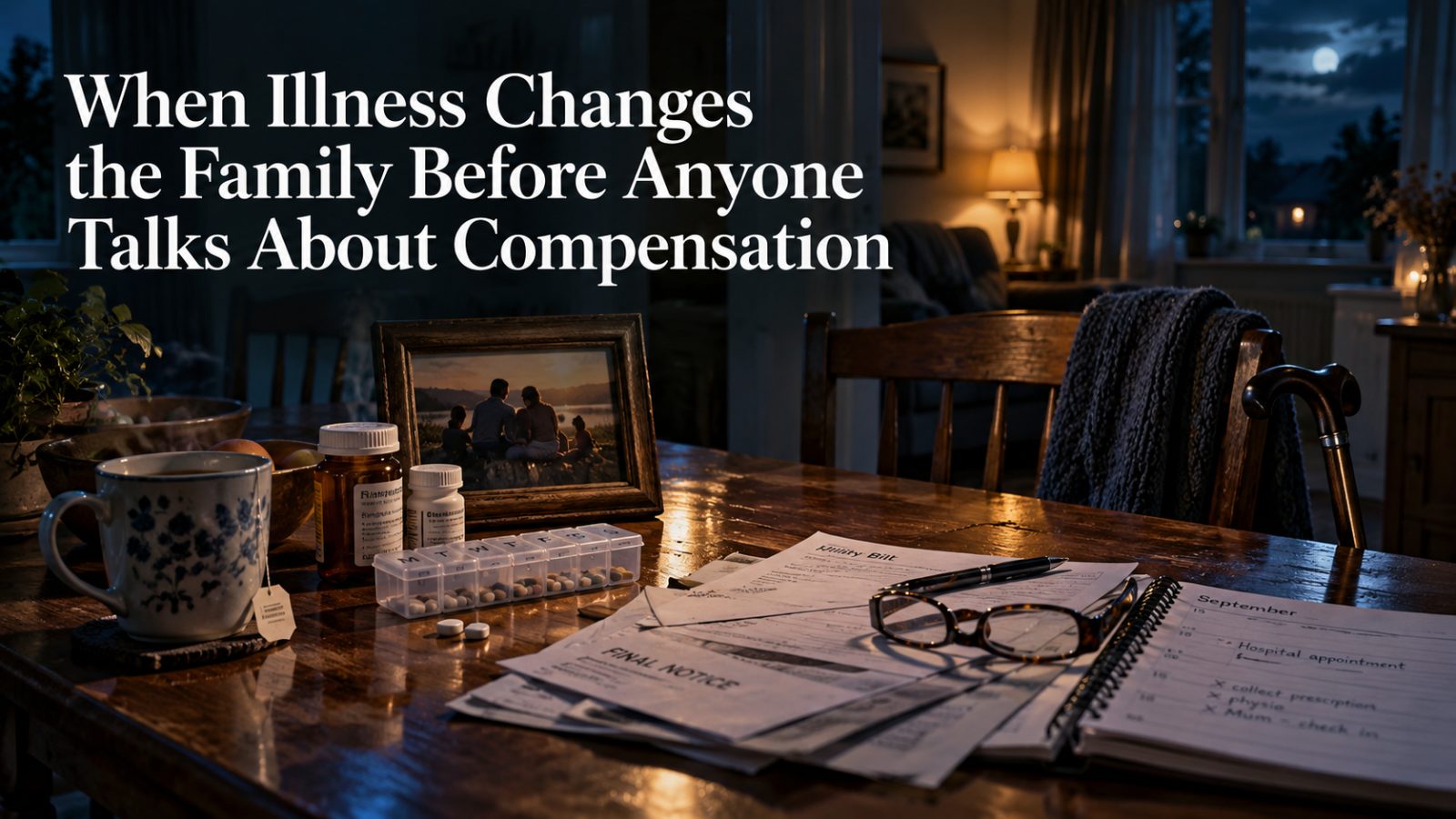
Compensation arrived decades later. The family had already paid a price.
Long before compensation forms, case managers and calculations, something else was already happening inside thousands of homes. Illness was changing the family.
Not suddenly, and not always in ways that were obvious from the outside. One person became less able to work. Another began doing more. A partner became a carer. A child became more watchful. Bills became harder to manage. Plans were postponed. Relationships shifted.
The infected blood scandal was never confined to hospitals and treatment rooms. The Infected Blood Inquiry found that its effects reached into marriages, family life, employment, finances and homes.
For many families, those changes began decades before anyone started talking seriously about compensation.
When a partner becomes a carer
There can be a profound difference between loving someone and becoming responsible for their care.
Sometimes those two roles coexist comfortably. Sometimes they collide.
A husband or wife who once shared responsibilities equally may gradually find themselves organising appointments, managing medication, helping with physical tasks, taking over household responsibilities and worrying constantly about what comes next.
The Inquiry’s psychosocial evidence recorded caring pressures affecting intimate relationships, alongside financial problems, housing worries and fears about the future. In some cases, witnesses described feeling that the relationship had changed from husband and wife to patient and carer.
That does not mean love disappeared. It means illness changed the terms on which everyday life operated.
Work changes too
Long-term illness rarely respects working hours.
Someone may reduce their hours. Someone may leave employment altogether. Another family member may increase theirs because the household still needs an income. Career progression can become less important than simply keeping the family afloat.
The Inquiry heard evidence of lost employment, restricted career opportunities and significant financial hardship among infected and affected people. Its experts also identified adverse effects on employment and household finances as recurring themes in witness evidence.
Those consequences can build slowly.
A missed promotion here. Reduced hours there. A pension contribution that never happened. A mortgage never taken out. Savings used because somebody could no longer work.
None of those decisions necessarily looks dramatic when considered individually. Over decades, they can reshape an entire family’s financial life.
Families learn to adapt
Homes adapt around illness.
Someone learns when the bad days are likely to come. Someone else takes over the school run. A sibling begins helping more. A partner remembers prescriptions, appointments and test results. Children learn when Mum or Dad needs quiet. Family members begin planning around treatment.
Holidays become harder. Social lives shrink. Spontaneity disappears.
The Inquiry’s psychosocial evidence repeatedly described the effects of chronic illness and treatment on the people surrounding the infected person, including spouses, children, parents and siblings.
These families were not simply witnessing illness. They were living inside its consequences.
Money changes the atmosphere of a home
Financial hardship does more than reduce what a family can afford. It changes how people feel.
Every unexpected bill matters more. Decisions about work become harder. Housing choices narrow. People worry about becoming dependent on others.
Arguments that appear to be about money can really be about exhaustion, fear or loss of independence.
The Inquiry specifically examined the impact of financial hardship and dependence on infected and affected people. Witness evidence described families dealing simultaneously with job loss, illness, bereavement and continuing financial concerns.
That pressure sits alongside the medical reality. The illness does not arrive alone.
### The future becomes smaller
Serious illness can also change the way families imagine the future.
Plans become conditional.
“We’ll do it next year.”
“When treatment is finished.”
“When things settle down.”
“When you’re feeling better.”
Sometimes those moments arrive. Sometimes they do not.
The Inquiry heard evidence that infection influenced decisions about relationships, marriage, having children and career choices. Fear of transmitting infection could itself create enormous pressure within relationships and families.
The result is not simply lost income or additional care. It can be a different life from the one the family expected to have.
And then people are asked to explain it
Years later, compensation processes attempt to put structure around that history.
There are categories, definitions, evidence requirements and calculations.
Those mechanisms are necessary if compensation is to be administered consistently. But the life being described did not happen neatly.
The partner who reduced work may never have thought of it as a financial loss at the time. The sibling who helped constantly may simply have believed that was what families did. The person providing care might never have called themselves a carer. The opportunities someone abandoned may never appear in a medical record.
Families adapted because they had to.
Only much later are they asked to look backwards and explain what those adaptations cost them.
The invisible work of keeping a family going
There is another form of labour that rarely appears on paper.
Remembering appointments. Organising medication. Watching for changes. Making phone calls. Explaining things to children. Protecting someone else’s dignity. Trying to keep life normal. Knowing when something is wrong. Being the person who holds everything together when everybody else is exhausted.
It may not come with a payslip. It may never have been formally recorded.
But it is work.
And in many infected blood families, it went on for years.
More than one life was altered
One of the clearest lessons from the Inquiry is that serious illness does not remain contained within one body.
The consequences of infected blood spread into marriages, family relationships, work, finances and homes.
That matters when we talk about what happened.
Because this scandal was never only about the person receiving contaminated blood. Around that person was often a family quietly reorganising itself to survive.
A partner taking on more. A sibling stepping in. A career changing direction. Money becoming tighter. Relationships being tested. Plans being abandoned. People carrying responsibilities they never expected to have.
Compensation arrived decades later.
The family had already paid a price.